
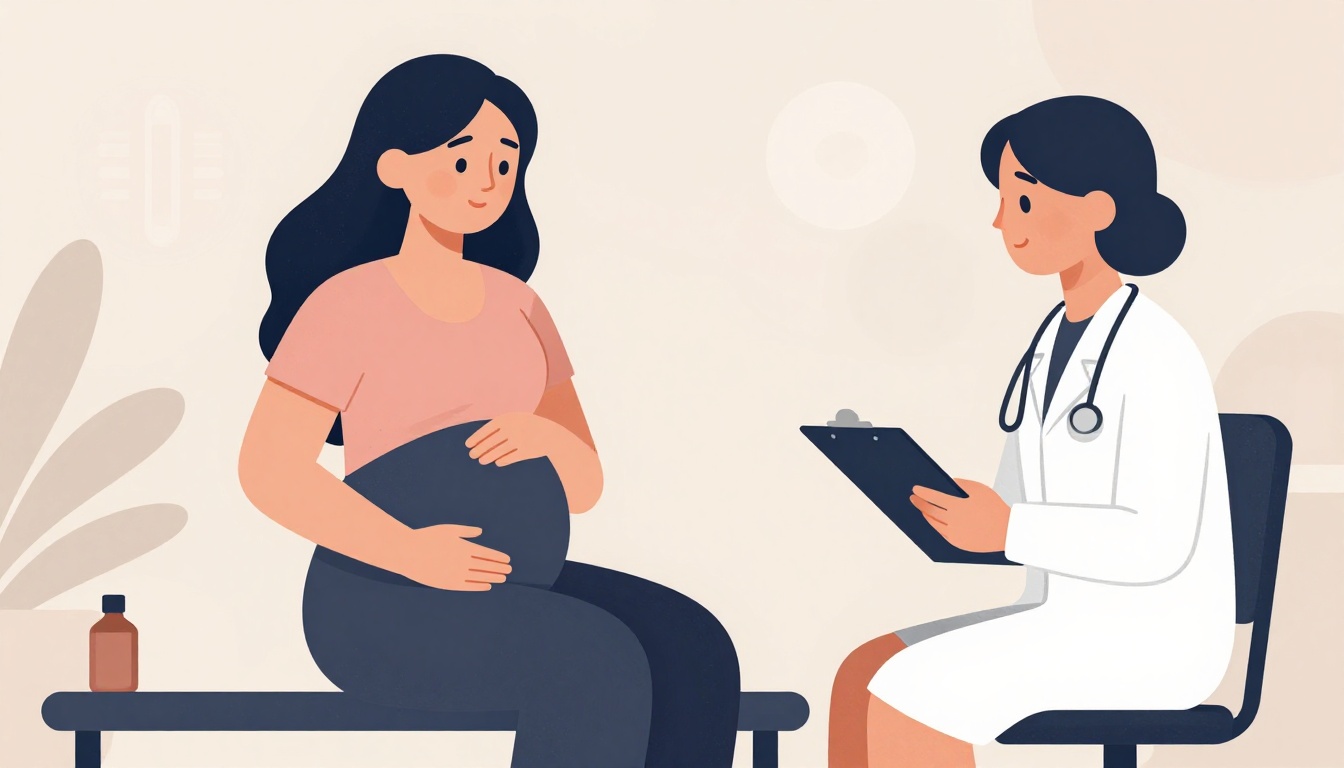
You know something is wrong. The ache, the cramp, the stab of pain in your pelvis — it's real, and it's affecting your life. But when you sit in the exam room, the words vanish. "It just hurts" is all you manage to say.
You're not alone. Chronic pelvic pain affects a significant number of women of childbearing age in the United States, yet research shows that only about one-third of those affected ever seek medical help (NCBI StatPearls). Many don't know how to describe what they're feeling. Others worry their pain will be dismissed. The result? Delayed diagnoses, unnecessary suffering, and frustration on both sides of the stethoscope.
The good news: describing pelvic pain is a skill you can learn. Here's exactly how to do it.
According to research cited by the NICHD, approximately how many women of childbearing age in the United States experience chronic pelvic pain lasting 6 months or longer?
Select one answer.
Why precise language matters
Pelvic pain isn't a single condition. It can come from your reproductive organs, your urinary tract, your digestive system, or your pelvic floor muscles. Endometriosis, ovarian cysts, interstitial cystitis, irritable bowel syndrome, and pelvic floor dysfunction can all produce similar sensations (Mayo Clinic).
The words you choose give your doctor diagnostic clues. "Cramping" points in a different direction than "burning." "Sharp and stabbing" suggests something different than "dull pressure." Your exact language matters.
Before your appointment: build a pain diary
Start tracking your symptoms at least one week before your visit. Use a notebook, a notes app, or a simple spreadsheet. Record these details each time you feel pain:
- Date and time. Note when the pain starts and stops.
- Intensity. Use a 0-to-10 scale where 0 is no pain and 10 is the worst pain imaginable.
- Location. Be specific: lower left side, deep center, radiating to your lower back or thigh.
- Quality. Pick one or two words from this list recommended by the NICHD: aching, cramping, sharp, stabbing, burning, throbbing, heavy, gnawing, shooting, tender.
- Duration. How long does each episode last? Seconds? Hours? All day?
- Triggers. Did it start after sex, during your period, after a long walk, or with a bowel movement?
- What helps or worsens it. Heat pack? Rest? Movement? Certain foods?
A single entry might look like: Oct 12, 3:00 PM — Intensity 6 — Dull ache low center pelvis — Started after 30 min of sitting at desk — Heat pad helped slightly.
During the appointment: use the PQRST framework
Doctors are trained to assess pain using a system called PQRST. Walk through these five questions with your provider:
- Provocation / Palliation — What makes it worse? What makes it better?
- Quality — What does it feel like? (Use the word list above.)
- Region / Radiation — Where is it? Does it travel anywhere?
- Severity — On the 0-to-10 scale, what's your average and worst level?
- Timing — When did it start? Is it constant or does it come and go? Is it linked to your menstrual cycle?
Don't forget the associated symptoms
Pelvic pain rarely travels alone. Tell your doctor about:
- Bloating or nausea
- Pain during or after sex
- Urinary urgency, frequency, or burning
- Changes in bowel habits (constipation, diarrhea, pain with bowel movements)
- Abnormal bleeding or spotting
- Fatigue or trouble sleeping
These details help narrow the list of possible causes faster than any single test.
What to do if you feel dismissed
If your doctor seems to minimize your pain, stay calm and be direct. Try saying: "This pain is affecting my ability to work/sleep/exercise, and I'd like us to figure out the cause together." You can also ask specifically: "What conditions could cause this type of pain, and what would rule them out?"
If you still don't feel heard, seek a second opinion. Your pain is valid, and you deserve a thorough evaluation.
How the Resident Expert Can Help
Dr. Jill Palko, a board-certified OB/GYN with over 12 years of clinical experience, understands how difficult it can be to translate what your body is telling you into language your doctor will act on. Through her practice at Dr. Jill at Your Cervix, she helps patients and health communicators alike bridge that gap — turning confusing symptoms into clear, actionable information. Whether you're preparing for your next appointment or creating health content that truly serves patients, Dr. Jill brings the clinical insight and communication skill to make sure nothing gets lost in translation.