
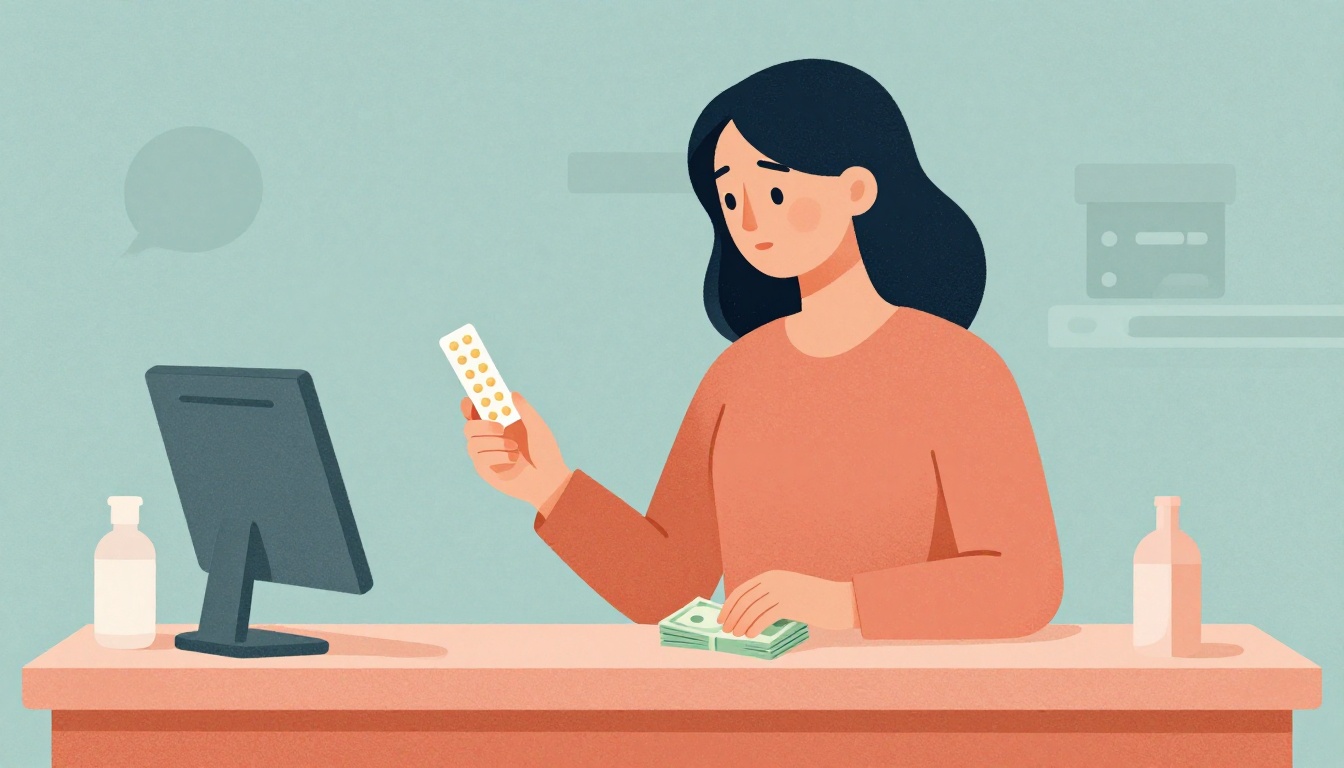
If you don't have health insurance, the price of birth control can feel like a guessing game. One pharmacy quotes $20 for a pill pack, another says $50. You might wonder if you can afford the method that works best for your body.
Let's cut through the confusion. Here's exactly what different birth control methods cost without insurance, plus actionable ways to lower your out-of-pocket expenses.
What is the typical monthly cost range for generic birth control pills without insurance?
Select one answer.
What birth control costs without insurance
Birth control pills are the most common method, and they're also one of the most affordable. Without insurance, a one-month pack of generic pills typically runs between $20 and $50, according to Planned Parenthood. Brand-name pills can cost more.
Longer-acting methods have higher upfront costs but can be more economical over time. Here's a quick breakdown:
- Birth control pill: $20–$50 per month
- Vaginal ring: $30–$60 per month
- Birth control patch: $40–$70 per month
- Depo-Provera injection: $40–$70 every three months
- Copper IUD: $50–$100 for the device, plus $100–$130 for insertion (lasts 5–10 years)
- Hormonal IUD: $350–$425 for the device, plus insertion fees (lasts 5–8 years)
- Implant (Nexplanon): $350–$450 (lasts 3 years)
These ranges come from the 2026 Price Guide by Ogaei. Your actual cost depends on your location, pharmacy, and whether you choose generic or brand-name products.
How to lower your birth control costs
You don't have to pay full price. Try these strategies:
-
Use a discount card or coupon. Services like SingleCare offer free coupons that can reduce the price of birth control pills at participating pharmacies. SingleCare reports that with their discounts, pills can cost as little as $9 per month.
-
Visit a community health center or Title X clinic. These clinics offer birth control on a sliding fee scale based on your income. You may pay nothing or very little.
-
Choose generic over brand-name. Generic pills contain the same active ingredients and are significantly cheaper.
-
Buy in bulk. Some pharmacies and online services let you purchase a three-month or even 12-month supply at once, which can lower the per-month cost.
-
Consider long-acting methods. An IUD or implant costs more upfront but can be the most cost-effective option over several years.
-
Check patient assistance programs. Some pharmaceutical companies offer free or low-cost birth control to people who qualify based on income.
What about emergency contraception?
Emergency contraception (the morning-after pill) costs $20–$60 without insurance, according to Hey Jane. Generic versions are usually cheaper. You can buy it over the counter at most pharmacies without a prescription.
The bottom line
Birth control is affordable even without insurance if you know where to look. Start by checking prices at multiple pharmacies, using discount cards, and visiting a community health center. Don't let cost stop you from getting the method that's right for you.
How the Resident Expert Can Help
Dr. Jill Palko, a board-certified OB/GYN and founder of Dr. Jill at Your Cervix, specializes in translating complex reproductive health information into clear, actionable guidance. Whether you need help understanding your birth control options or want to create patient education materials that truly resonate, Dr. Jill brings clinical expertise and a patient-first perspective to every project. Her medical writing services help healthcare organizations communicate with confidence and clarity.
Quiz: Test your knowledge
What is the typical monthly cost range for generic birth control pills without insurance?
- A) $5–$15
- B) $20–$50
- C) $75–$100