
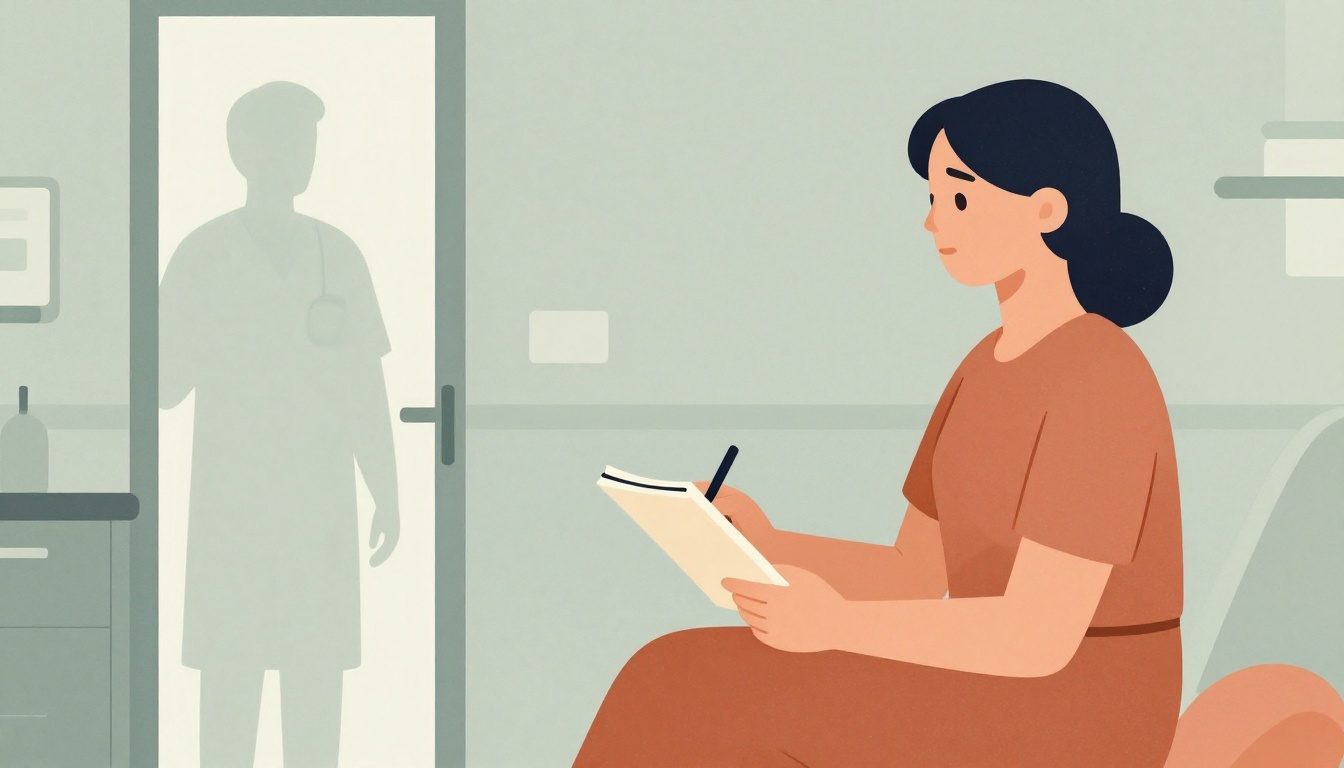
You just got the call. Your Pap smear came back abnormal. Your mind jumps to worst-case scenarios. But here's what your doctor may not tell you right away: most abnormal results are not cancer.
According to the CDC, only a small fraction of Pap tests show cell changes, and the vast majority of those are mild. The real problem isn't the result — it's the confusion that follows.
You need a clear plan. You need to know what to ask. Here are the six questions that will get you from panic to a real next step.
Which statement about abnormal Pap results is true?
Select one answer.
1. What type of abnormal cells were found?
Not all abnormal results are the same. Your report may say ASC-US, LSIL, HSIL, or AGC. Each one means something different.
The National Cancer Institute explains that ASC-US is the most common finding — it means some cells look unusual, but it's not clear why. LSIL usually points to an HPV infection that may clear on its own. HSIL is more serious and needs follow-up sooner.
Ask your doctor to read you the exact result name. Write it down.
2. Did you run an HPV test alongside the Pap?
Co-testing changes everything. If your Pap is abnormal but your HPV test is negative, your risk is much lower. If both are positive, you need a closer look.
The American Academy of Family Physicians recommends HPV testing as the next step after ASC-US results. It tells you whether high-risk HPV types are driving the cell changes.
3. Do I need a colposcopy?
A colposcopy is a magnified exam of your cervix. It sounds intimidating, but it's an in-office procedure that takes about 10 to 15 minutes.
You'll likely need one if you have HSIL, AGC, or a positive HPV test with ASC-US. During the procedure, your doctor may take a small biopsy. That tissue sample gives the clearest answer about whether precancer is present.
4. If I need a biopsy, what will the results mean?
Biopsy results use a grading system called CIN (cervical intraepithelial neoplasia). CIN 1 is mild — often monitored. CIN 2 or 3 means more significant changes that may need treatment.
Don't be afraid to ask: "What grade is it, and what does that mean for my timeline?" Some low-grade changes resolve without any treatment at all.
5. What happens if I do nothing?
This is the question most patients forget to ask. Some abnormal results, especially low-grade ones in younger women, clear up on their own.
The ACOG guidelines recommend repeat testing in one year for certain low-risk scenarios. Watchful waiting is a legitimate option — but only when your doctor agrees it's safe based on your specific results.
6. How will this affect my pregnancy plans or birth control?
If you're planning a pregnancy or currently pregnant, abnormal results need special handling. Pregnancy can cause hormonal changes that affect cervical cells. Colposcopy is safe during pregnancy, but biopsy is often deferred until after delivery.
Ask your doctor: "Does this change anything about my birth control, fertility, or pregnancy care?"
Your follow-up checklist
- Write down your exact Pap result name (ASC-US, LSIL, HSIL, etc.)
- Confirm whether an HPV test was done and what it showed
- Ask if a colposcopy is recommended and when
- If a biopsy is done, request the CIN grade in plain language
- Clarify the follow-up timeline: 6 months, 1 year, or sooner
- Discuss any pregnancy or contraception concerns
How the Resident Expert Can Help
You don't have to navigate this alone. Dr. Jill at Your Cervix provides physician-led medical writing and patient education resources that turn complex OB/GYN information into clear, actionable guidance. Whether you're a patient trying to understand your results or a health professional creating content for your audience, Dr. Jill Palko's clinical expertise ensures every answer is accurate, practical, and grounded in real-world care.
Quiz: Test your knowledge
Before you go, check what you learned. Which statement about abnormal Pap results is true?